


Supporting Early Maths Skills While Out And About
Early maths skills form the foundation for a child’s future learning and everyday problem-solving. Everyday outings offer countless opportunities to support early maths development naturally and enjoyably. Here are some practical ways to weave maths learning into daily activities while out and about with your child.

Spotting Numbers and Shapes in the Environment
One of the simplest ways to encourage maths skills is by pointing out numbers and shapes in everyday surroundings. Whether walking in the park, visiting a supermarket, or waiting at a bus stop, draw attention to:
Numbers on signs, buses, or price tags
Shapes of objects like windows, traffic signs, or packaging
Patterns on clothing, tiles, or playground equipment
For example, ask your child to find all the circles they can see or count how many steps it takes to reach the bench. These activities build number recognition, shape awareness, and observation skills.
Using Everyday Objects to Explore Counting and Sorting
At a café, for instance, you might:
choose a table with enough chairs for you group
ask your child to count sugar packets
sort straws by colour.

These hands-on experiences help children understand concepts like quantity, comparison, and categorisation.
Playing Simple Maths Games on the Go
Games are a fun way to engage children with maths without needing special materials. Some easy games to play while out include:
I Spy Numbers: Spot numbers on signs or license plates and call them out.
Shape Hunt: Challenge your child to find a specific shape around them.
Counting Steps: Count how many steps it takes to cross a street or reach a destination.
Comparing Sizes: Look at cars, trees, or buildings and talk about which is bigger or smaller.
These games encourage children to use maths language and thinking in real-world contexts, making learning meaningful and memorable.
Engage your child in conversations about what they see and do. Ask questions such as:
How many apples do you think are in the basket?
Can you spot a sign that is a circle?
Shall we take the long or the short path?
Look at this big leaf! I wonder if we can find one that is even bigger!
These questions promote critical thinking and help children articulate their understanding of maths concepts. Listening carefully and responding positively encourages curiosity and confidence.
Maths in Garden Play

Children thrive outside, it helps to keep them healthy and build their muscles. There are opportunities to explore maths in the garden too... all through play.
Equipment such as balance bike and scooters allow children to negotiate space, learn and use directional language and start to learn about speed.
Creating dens provides children with problem solving opportunities and also positional language development, e.g. on top of, at the side of, underneath, at the back, etc.
Blowing bubbles can include size language, e.g. big small, up, down, how far do they travel? etc.
Water and sand play can include elements of capacity, e.g. filling and emptying, half full, full, and empty. Sand play also provides opportunities for using shaped moulds, building castles and also making marks in the sand
Bats and balls not only provide lots of opportunities for developing children’s muscles and hand eye coordination but also maths. Different sized balls and bats, shapes of the 2D and 3D items, how high / far can you throw / hit a ball, how many times can you throw and catch a ball or bounce a ball?
Maths at the Park
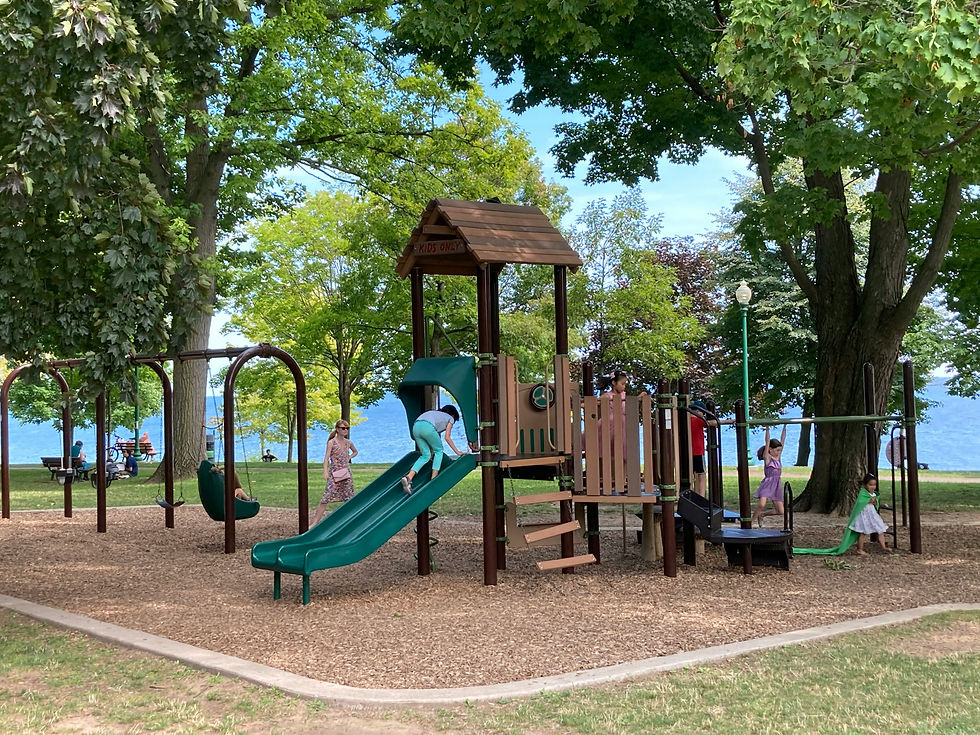
Time at the park is great fun; lots of physical activity and fresh air will help to support your child’s overall health and wellbeing and here are are some ways time at the park can support maths.
Playgrounds can support directional language, e.g. up, down, in, out, over, under, through
Swings support directional language and speed, e.g. faster, slower, backwards, forwards
Hide and seek provides opportunities for positional and directional language as well as counting
How fast can your child run, how high can they jump, how many hops can they do?
Maths in nature
A walk in the woods, along the canal or around a reservoir can provide opportunities to enjoy nature and use more maths.

Collect different nature treasures with your child. Count and sort them into different groups by size, shape, or type
Use your bodies to measure how wide the tree trunk is, how long the branch is, how many steps from one tree to the next. How do your steps compare to your child's?
How many birds, squirrels, ducks or insects can you spot?
Notice patterns on leaves or in icy patches
Remember whatever you do with your child when you are out and about from walking to the shops to visiting the local park, there are always opportunities to include maths. It is important to have fun together and enjoy learning through play or everyday tasks. Your child will retain more knowledge and skills if they are able to progress at their own rate and relate this back to activities they enjoy with you.


Comments