


Super Sticks!
Sticks are an important part of life at Wildlings. If there is one natural resource that is used, played with, and treasured more than any other during our woodland sessions, it has to be the humble stick.
The same has been true at home. I can vividly remember my now nine-year-old son taking his first tentative steps through the woods before spotting a huge stick—almost bigger than he was. He struggled to carry it for the next hour, but there was no way he was leaving it behind!
Since then, we have amassed quite a collection by our front door: sticks of all shapes and sizes, each one proudly declared a “good stick” and absolutely essential to bring home. We now operate a one-in, one-out policy, but if I quietly move or dispose of one or two, their absence is almost always noticed.
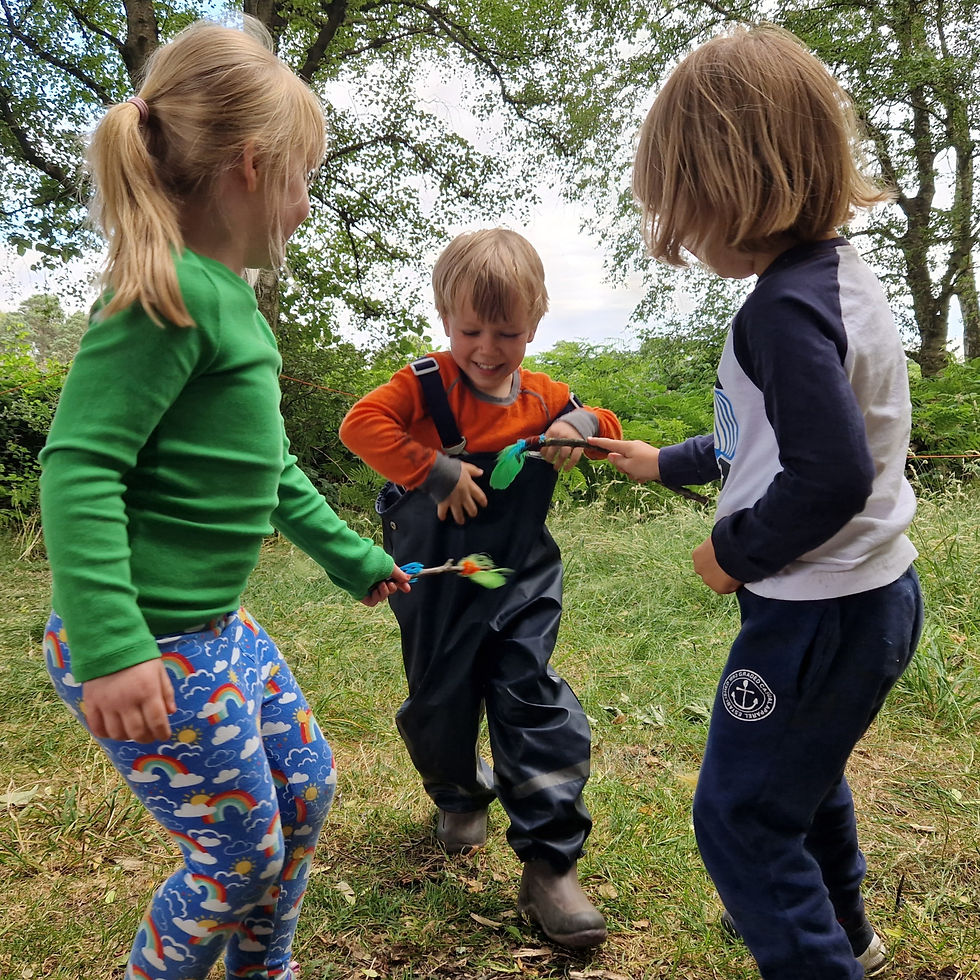
What Is So Good About a Stick?
The stick is perhaps the oldest toy of all time and the starting point for endless adventures enjoyed by generations of children around the world. Children can poke, drag, and draw with sticks, creating patterns in mud, sand, or leaves. They can build with them, bat balls, make music, or invent entirely new games.
When children play imaginatively with sticks, they develop creativity and strengthen their imaginations. With the right stick—and a little imagination—that humble piece of wood can become almost anything. A stick can transform into a sword for battling trolls in the woods, a magic wand for casting spells, a broomstick that whisks you away to another world, or even a fishing rod for an afternoon by an imaginary river. There's nowhere a stick can't take you!

Playing with sticks not only sparks imagination but also offers physical benefits. Carrying, dragging, and manipulating branches helps children build strength, coordination, and confidence outdoors. Teamwork often comes into play when a stick is too large for one child to move alone, encouraging children to communicate, cooperate, and problem-solve together.
While sticks may be the oldest toy, they may also be one of the best. They are simple, free, and endlessly versatile. So many outdoor activities can begin with nothing more than a good stick. Here's a few ideas you could try....
Make a stick mobile or wind chime
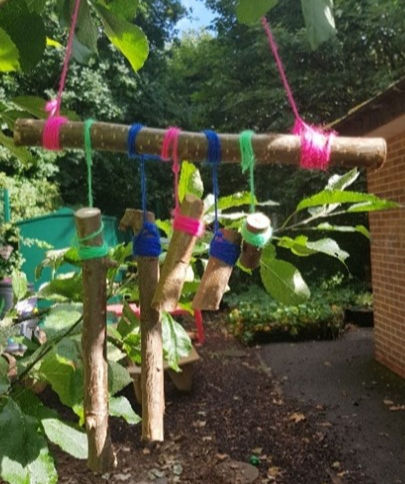
Collect sticks of different lengths and tie them to a larger stick using twine, string, or wool. Hang them close enough together that they gently knock against one another when moved by the wind. Search for natural materials that make interesting sounds, such as broken shells, seed pods, or pine cones, and add these to your mobile. You could also include feathers, leaves, or other lightweight treasures that will flutter in the breeze.
Make a dream or sun catcher

Twist a thin, flexible branch into a teardrop shape, or use three sticks to create a triangle and secure them together with wool or string. Wrap the frame with colourful wool and decorate it with found objects such as feathers, cones, leaves, or shells. To make a sun catcher, glue tissue paper onto the frame and add pressed leaves, petals, or flowers. Hang it in a sunny spot and watch the light shine through your woodland creation.
Create some art work
While plenty can be done with sticks alone, adding a few simple materials opens up even more creative possibilities. Use clay and natural treasures to create woodland creatures, miniature people, or imaginative sculptures. Clay also sticks surprisingly well to tree bark. We love making woodland faces for others to discover during their walks. Simply press a dollop of soft clay onto the side of a tree and use sticks, leaves, moss, seeds, and feathers to create a face. You could also try your hand at some land art by arranging sticks and other natural materials into patterns, spirals, or pictures on the ground.
Make some noise
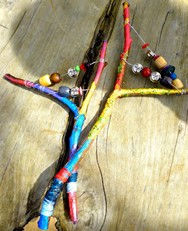
The woods can be an oasis of calm and tranquillity, but as everyone knows, children also love to make some noise! A favourite activity amongst the Wildlings is drumming with sticks on the side of trees or logs, pans from the mud kitchen, anything they find that makes a good noise really. Another good way to make some noise is by creating a rattle. Find a Y shaped stick which you can then paint or wrap in coloured wool. Attach some thin wire at the top onto which you can thread beads, bells, bottle tops, or anything that might make a bit of noise. Alternatively, you can thread small bells onto pipe cleaners and wrap around a stick for a simple jingle stick.
Wind Streamers

Once you have found a good stick, why not transform it into a wind streamer? Decorate your stick with paint, wool, or natural materials, then tie strips of fabric, ribbon, or old scraps of material along one end. Satin and silk work particularly well, as they catch the breeze beautifully. Now you're ready to run, skip, hop, and jump with your very own wind streamer. You don't even need a windy day—once your little one starts moving, the ribbons will trail behind them in a colourful display.
STICK PLAY
Sticks give children the freedom to invent, experiment, and discover. They make fantastic building materials and can inspire hours of open-ended play. Challenge children to build a bridge strong enough to hold a toy, create the tallest tower possible, or construct a den for a teddy. See how high you can build by carefully layering sticks on top of one another, or use sticks to design fences, pathways, and shelters. Add a few toy animals or figures and children can create an entire miniature world for imaginative adventures.
Journey sticks and stick trails
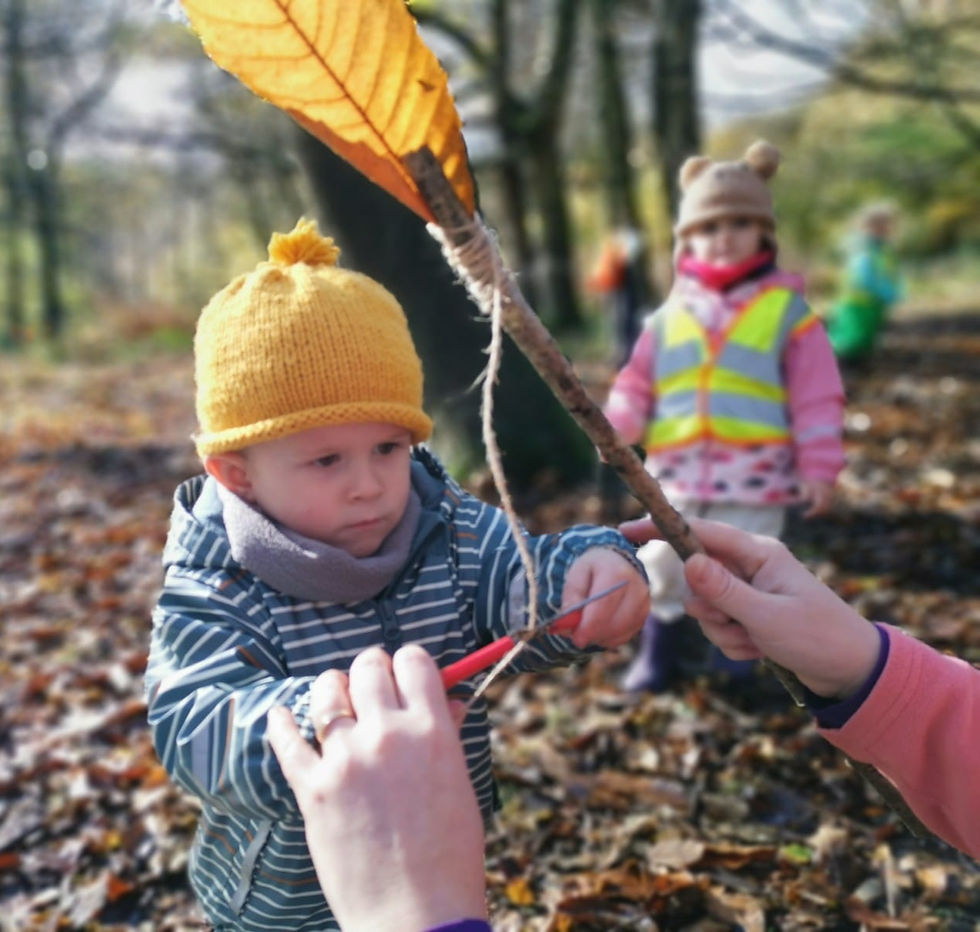
Children love to collect treasures, and a journey stick is a wonderful way to help them gather, display, and remember their adventures. As always, the starting point is finding a really good stick. As you explore, encourage your child to attach their finds along the length of the stick. Colourful leaves, spiky conker cases, feathers, flowers, and seed heads all work well, but the joy of a journey stick is following your child's lead and letting them choose what is special enough to add. You can secure your treasures using string, wool, elastic bands as you walk.
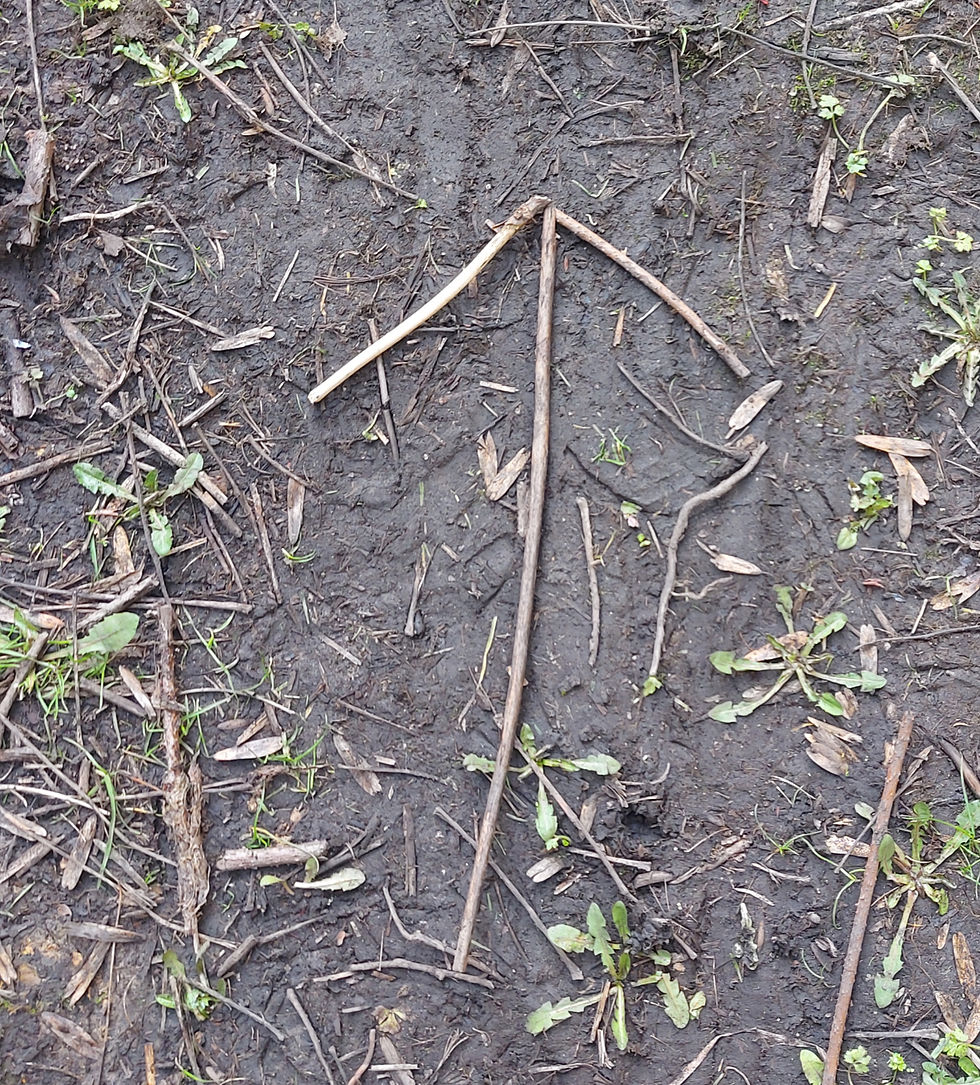
A treasure hunt is another favourite activity. In its simplest form you can hide a toy or some well wrapped pieces of snack a few metres away then use sticks to mark the way to the treasure. Or if in a group, you could take in in turns to lay a ‘secret’ trail to lead the others through a woodland or along a path. Make sure to lay plenty of arrows to ensure that the trail is easy for others to follow. Once the rest of the group have found you, it's their turn to lay a trail for you.
Staying Safe with Sticks
As always, a little caution goes a long way. Sticks are part of the natural world and provide food, shelter, and habitats for wildlife, so collect them thoughtfully and treat nature with respect.
General safety guidelines:
Take care when running with sticks.
Never point sticks towards faces.
Do not swing or wield sticks at people or animals.
Watch out for splinters.
If throwing sticks or stick-made creations, make sure everyone is standing well clear.
Wash hands thoroughly after outdoor play.


Comments